
How Tobacco Companies Infiltrated the American Pantry
By Hayden Hudiburg
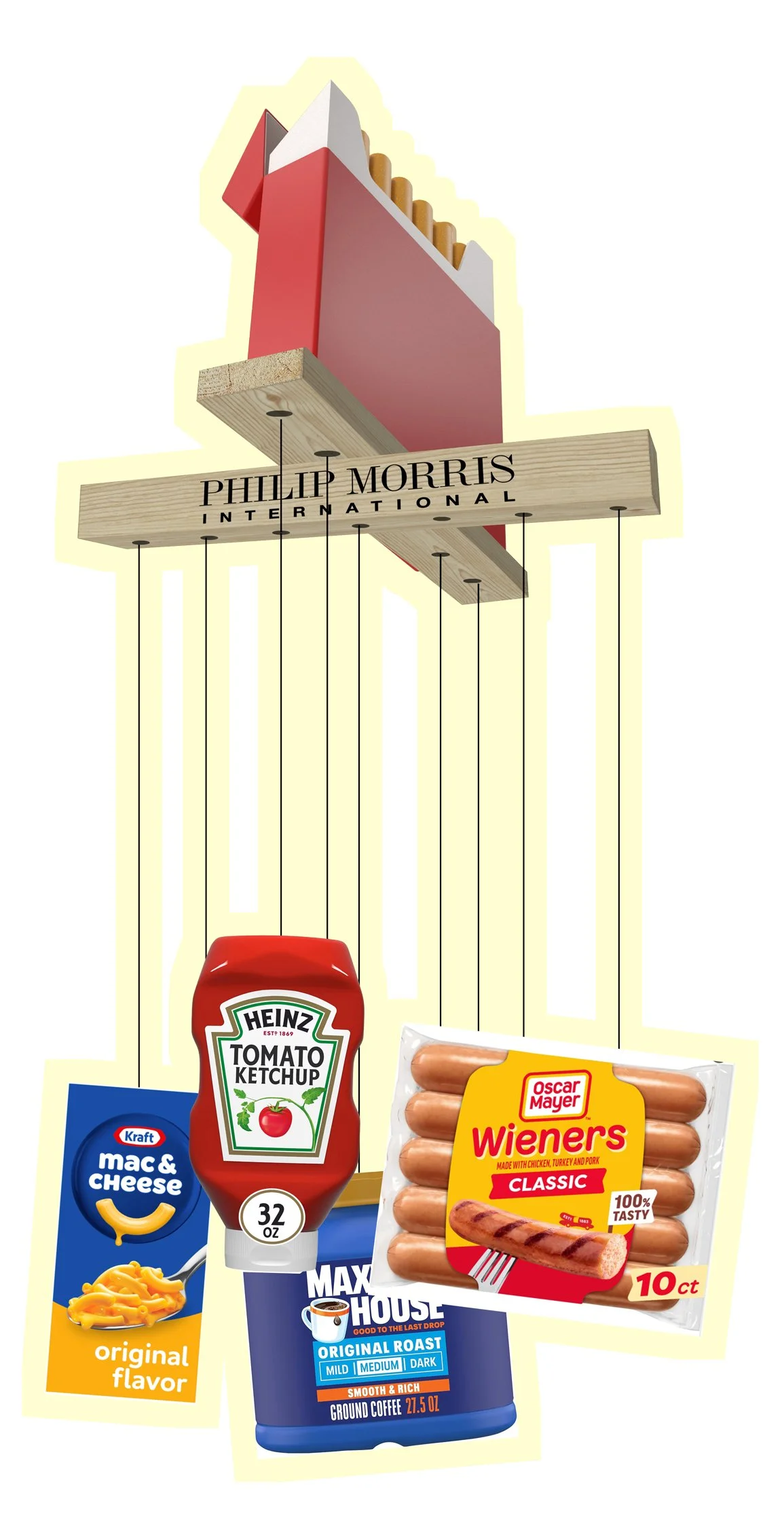
Did you know that tobacco companies bought into the food industry? In 1985, Philip Morris Companies (now Altria Group), the parent company of Marlboro, acquired General Foods, a major food conglomerate known for brands like Oscar Mayer, Maxwell House, and Jell-O.[1] But they didn’t stop there. Subsequently, in 1988, Philip Morris also purchased Kraft, Inc., a leading food company recognized for products such as Kraft cheese and Heinz ketchup.[2] Although they would add a line of “healthy” products as well, such as Boca Burgers and Balance Bars. These acquisitions marked a significant expansion of tobacco companies into the food industry, culminating in the formation of Kraft General Foods in 1989. Philip Morris wasn't the only tobacco company interested either. R.J. Reynolds Industries also bought in, merging with Nabisco Brands to form RJR Nabisco. This strategic move combined R.J. Reynolds' tobacco products with Nabisco's extensive portfolio of snack foods, including brands like Oreo, Ritz, and Triscuit. RJR Nabisco continued to operate under the Nabisco name until it was acquired by Philip Morris in 2000, becoming part of Kraft Foods.[3] The question is, why did Big Tobacco feel the need to invest in the food industry?
The Why
Tobacco companies diversified into the food industry in the late 20th century, driven by regulatory pressures and the declining acceptance of smoking. By acquiring food manufacturers, they mitigated financial risks and leveraged their expertise in marketing and product development to target the "bliss point"—the optimal combination of sugar, fat, and salt that enhances consumer cravings.[1] While nicotine is the primary addictive agent in tobacco products, sugar (and specifically fructose, as found in high-fructose corn syrup, which is cornstarch mixed with chemicals) plays a similar role in food. When consumed, sugar activates areas in the human brain involved in pleasure and reward, triggering the release of dopamine—the same neurotransmitter in the human brain involved in the addictive response to drugs like nicotine. By engineering foods with sugar, fat, and salt in specific combinations, tobacco companies were able to create a cycle of dependency on these food products, leading to long-term consumption. This strategy allowed them to broaden their consumer base and apply their marketing infrastructure to food and beverage products, boosting profitability at the expense of people's health.
The Effect
When tobacco companies entered the food industry, their strategies had significant and lasting impacts on the health of Americans. The widespread increase in the availability of processed, calorie-dense, and nutrient-poor foods in the American diet led to a rise in obesity rates and diet-related health conditions such as type 2 diabetes, cardiovascular disease, and metabolic syndrome.
“Research indicates that between 1988 and 2001, foods owned by tobacco companies were 29% more likely to be classified as “fat and sodium hyper-palatable” and 80% more likely to be “carbohydrate and sodium hyper-palatable” compared to foods not owned by tobacco companies.[1] ”
This drove changes in consumption patterns, particularly among vulnerable populations, exacerbating health disparities and increasing the overall burden of diet-related diseases. Furthermore, tobacco companies employed aggressive marketing tactics and targeted advertising, similar to those used to promote cigarettes, to normalize and glamorize these unhealthy foods. This contributed to a culture of overconsumption and reduced awareness of the potential health consequences, further entrenching the prevalence of obesity and related diseases in the U.S. For example, the prevalence of obesity in American adults rose sharply between 1980 and 2000. Only 15% of people between the ages of 20 and 74 were considered obese in 1980, which rose to 23% by 1994, and 30.9% in 2000.[2]
Conclusion
The tobacco industry’s foray into the food sector not only reshaped the business landscape but also left a profound mark on public health and consumer habits in America. Through proven strategies, tobacco companies didn’t just sell food—they sold addiction to eating. Just as with cigarettes, their goal was to make food irresistible, habitual, and ultimately part of everyday life, ensuring that consumers kept coming back for more, often without realizing the health consequences. This legacy of addictive food products continues to have a significant impact on public health today. Understanding this history underscores the importance of critically examining corporate influence in shaping dietary trends and prioritizing public health over profit.
For more on this topic, a video from YouTube explores how these companies flooded the food supply with hyper-palatable products (YouTube).

About Hayden
Hayden is a local writer and editor whose path has led him on a journey of discovery and exploration. He is currently working on his debut book series and is an ex-amateur MMA fighter.
SOURCES:
1 Britannica. (n.d.). Kraft Foods Inc. Retrieved from https://www.britannica.com/money/Kraft-Foods-Inc
3 ABC News. (2002, June 22). Philip Morris buys Kraft, General Foods for $12.9 billion. Retrieved from https://abcnews.go.com/Business/story?id=88088&page=1
3 "RJR Nabisco Inc." Encyclopaedia Britannica. Retrieved from https://money.britannica.com/money/RJR-Nabisco-Inc
4 University of Michigan, Psychology Department: "Many of Today’s Unhealthy Foods Were Brought to You by Big Tobacco," accessed January 14, 2025, Many of today’s unhealthy foods were brought to you by Big Tobacco | U-M LSA Department of Psychology
5 University of Kansas News:
"Study Shows Food from Tobacco-Owned Brands Was More Hyper-Palatable Than Competitors’ Food," accessed January 14, 2025, Study shows food from tobacco-owned brands more 'hyperpalatable' than competitors' food | KU News
6 Forbes. (2023, September 8). Did tobacco companies also get us hooked on junk food? New research says yes. Retrieved from Did Tobacco Companies Also Get Us Hooked On Junk Food? New Research Says Yes
Disclaimer: The views, thoughts, and opinions expressed in this website and its articles belong solely to the respective authors and do not necessarily reflect the views, beliefs, or positions of Local Healers, its affiliates, or any associated entities. The content provided is for informational purposes only and should not be construed as professional, legal, or financial advice. Readers should conduct their own research and seek appropriate professional guidance before making any decisions based on the information presented on this site. Local Healers assumes no responsibility or liability for any errors or omissions in the content or for any actions taken based on the information provided.